
The Golden Rule of Renting
If you’ve started searching for a new apartment, you’ve likely heard the phrase: “Don’t spend more than 30% of your income on rent.” Earnest.
Known as the “30% rule” for apartment rentals, this guideline has been a cornerstone of personal finance for decades. Landlords use it to screen tenants, and financial experts recommend it to keep housing costs manageable.
But what exactly is this rule? Does it still apply in today’s high-cost rental market? And how do you calculate it correctly?
In this guide, we’ll break down everything you need to know about the 30% rule—and when you might want to bend it.
What Is the 30% Rule for Apartment Rentals?
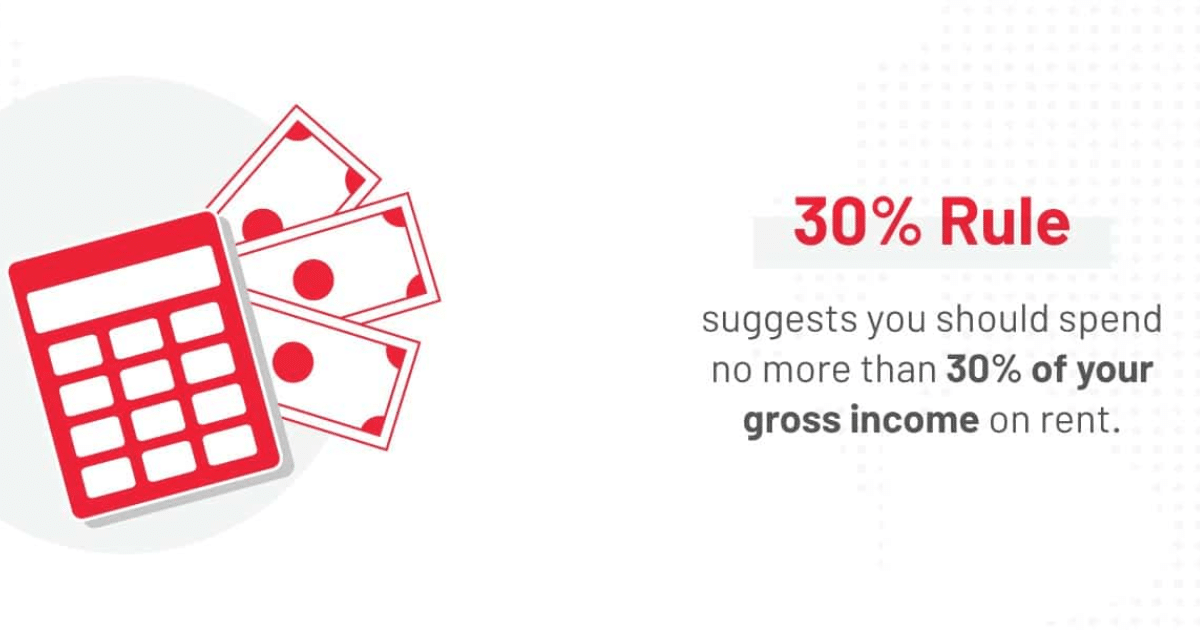
The 30% rule is a simple affordability guideline: No more than 30% of your gross monthly income should go toward rent.
- Gross income = Your total income before taxes and deductions.
- Example: If you earn $4,000 per month before taxes, you should look for apartments costing $1,200 or less per month.
$4,000 x 0.30 = $1,200
This number is meant to leave you enough room for other necessities: utilities, groceries, transportation, savings, and discretionary spending.
Why Is 30% the Magic Number?
The 30% standard dates back to 1969, when the U.S. government passed the Brooke Amendment. It capped public housing rent at 25% of a tenant’s income, later raised to 30%. Over time, 30% became the unofficial benchmark for housing affordability.
The U.S. Department of Housing and Urban Development (HUD) still considers households paying more than 30% of income on housing as “cost-burdened,” and those paying over 50% as “severely cost-burdened.”
How to Calculate the 30% Rule (With Examples)
Here’s a quick reference table for annual salaries:
| Annual Gross Income | Monthly Gross Income | 30% for Rent |
|---|---|---|
| $30,000 | $2,500 | $750 |
| $45,000 | $3,750 | $1,125 |
| $60,000 | $5,000 | $1,500 |
| $75,000 | $6,250 | $1,875 |
| $90,000 | $7,500 | $2,250 |
Pro tip: Use net income (take-home pay) for a more conservative estimate. If you take home $3,500/month, 30% would be $1,050—leaving more breathing room.
Does the 30% Rule Still Work in 2025?
The short answer: It’s increasingly difficult, but still a useful starting point.
Why it’s harder today:
- Rent prices have outpaced wage growth in most U.S. cities.
- In expensive markets (NYC, San Francisco, Miami), many renters spend 40–50% of income on rent.
- Other costs (student loans, healthcare, childcare) have risen dramatically.
Why it still matters:
- Landlords often require rent-to-income ratios of 30–33% for approval.
- Sticking close to 30% helps you avoid becoming “rent-burdened,” which limits your ability to save for emergencies, retirement, or a down payment.
Alternatives to the 30% Rule
Since the 30% rule is rigid, consider these more flexible affordability methods.
1. The 50/30/20 Budget
- 50% for needs (rent, utilities, groceries, insurance)
- 30% for wants (dining, streaming, hobbies)
- 20% for savings and debt repayment
If rent alone eats up 40% of your income, you’ll need to cut wants or savings to balance the budget.
2. The “$1,000 Rule of Thumb”
Some experts suggest your monthly rent should not exceed what you’d earn in a single 40-hour workweek at your hourly rate.
(Example: If you earn $25/hour, monthly rent ≤ $1,000.)
3. The Actual Housing Cost Method
Include rent + utilities + renters insurance to see your true housing cost. Keeping that total under 35% of net income is often more realistic than 30% of gross.
When You Can Break the 30% Rule
It’s not an absolute law. You might safely exceed 30% if:
- You have no debt (student/car/credit card payments are zero).
- You live in a walkable/bikeable city and spend $0 on car payments, gas, or parking.
- Your income is rising quickly (junior to senior role within months).
- You prioritize housing (e.g., remote workers needing a dedicated office).
But if you have significant debt, a car, or dependents, try to stay at or under 30%.
What Landlords Actually Use (The 3x Rule)
Many landlords use a related metric: The 3x rent rule—your gross monthly income must be at least 3 times the monthly rent.
| Monthly Rent | Minimum Required Income (3x) |
|---|---|
| $1,000 | $3,000/month ($36k/year) |
| $1,500 | $4,500/month ($54k/year) |
| $2,000 | $6,000/month ($72k/year) |
That’s essentially the same as the 30% rule in reverse:
(Rent x 3 = Income) → (Rent ÷ Income = 33%). So expect landlords to allow 30–33%.
Frequently Asked Questions (FAQ)
Is 30% of gross or net income?
Gross income before taxes. For a safety buffer, use net income instead.
What if I can’t find an apartment at 30% of my income?
Consider roommates, relocating to a cheaper neighborhood, or negotiating rent (especially in slower rental seasons like winter).
Does the 30% rule include utilities?
Traditionally no, but it’s wise to keep rent + utilities under 30% of net income.
Is the 30% rule outdated?
Yes, for high-cost cities. In New York or LA, 40% is common—but it requires cutting other budget categories significantly.
My Final Verdict: Follow the Spirit, Not the Letter
The 30% rule for apartment rentals remains an excellent screening tool and financial guardrail. Use it to shortlist apartments, then adjust based on your debt, commute, savings goals, and lifestyle.
- Best case: Rent ≤ 30% of gross income → financial flexibility.
- Acceptable case: Rent ≤ 35% of net income → moderate strain.
- Warning zone: Rent ≥ 50% of net income → high risk of debt or no savings.
Before signing a lease, run your numbers through a rent affordability calculator and ask yourself: After paying rent, can I still afford food, transportation, an emergency, and a small amount of fun?
If yes—you’ve found your home, even if it’s 32%.
Ready to find an affordable apartment? Sign up for rental alerts in your budget range, and always calculate pre-approval before you tour.
Visit Apartments for Sale in Nairobi page to view latest listings in Nairobi.

Join The Discussion